


Rewards Arcade: Earn Cash
PIXELPRIZE LIMITED
I spent time with Rewards Arcade: Earn Cash as a casual entertainment app, and my first impression was straightforward: it is built around short play sessions rather than long, demanding gaming. The idea is to open the app, play quick games, collect points, and work toward a cash or gift-card redemption. That makes it easy to understand, but the real question is whether the experience feels smooth enough to return to every day.
My answer is cautiously positive. I like the low-commitment format, especially when I only have a few spare minutes, but I would not treat it as a replacement for a full game library or as a dependable income source. The rewards concept is the attraction; the value comes from deciding whether the time spent playing feels worthwhile to you.
How Rewards Arcade feels in everyday use
The app sits in the entertainment category and is developed by PIXELPRIZE LIMITED. It is free to use, carries a Mature 17+ age rating, and supports devices running Android 7.1 or later. Its current version is 2.0.17, while the app was released on August 24, 2026. Those details matter because this is the kind of product people may install on an older spare phone, not only on a recent flagship.
In practical terms, I see it working best as a small habit. You might open it while waiting for a bus, during a short break, or after finishing a routine task at home. The quick-game approach removes the pressure to learn a complicated control scheme or remember a large story. I can understand the appeal for someone who wants a little distraction with a visible points goal attached.
The store summary presents the central promise clearly: play quickly, collect points daily, and redeem them for cash or gift cards. I would keep expectations grounded, though. Reward apps are most satisfying when the entertainment itself is acceptable. If every session feels like work and the only reason to continue is the hoped-for payout, the experience can become frustrating very quickly.
Related News

Why WhatsApp Messenger Still Makes Everyday Communication Feel Easy

Jurassic World: The Game Is the Better Dino Tycoon for Strategic Players

Threads in Real Life: Who Should Join, Lurk, or Leave

How SHEIN Turned Shopping Into an Endless Content Feed

How to Make Fortnite Feel Smarter on Mobile

Should You Switch to Microsoft Outlook on Mobile?
Speed expectations during short sessions
The strongest performance advantage here is the compact nature of the concept. Quick games should suit people who dislike waiting for a large game world to load or committing to a long round. On a compatible phone, I would expect the basic interaction to feel more immediate than a graphically intensive mobile game, simply because the app is aimed at brief arcade-style activity rather than a large campaign.
That does not mean every part of the experience will feel equally fast. Reward-focused apps often involve several stages around play: opening the app, choosing an activity, tracking points, and checking the redemption area. Even when the games themselves are simple, these surrounding steps can determine whether the whole session feels efficient. My advice is to judge the app by the complete loop, not just by how quickly an individual game starts.
A useful routine is to begin with a short session and notice how much of it is actual play. If most of your time goes into navigating menus or checking progress, the app may be better suited to occasional use than daily use. This is one of the less obvious trade-offs: a simple game can still produce a slow-feeling experience if the reward workflow adds too much friction.
Gallery
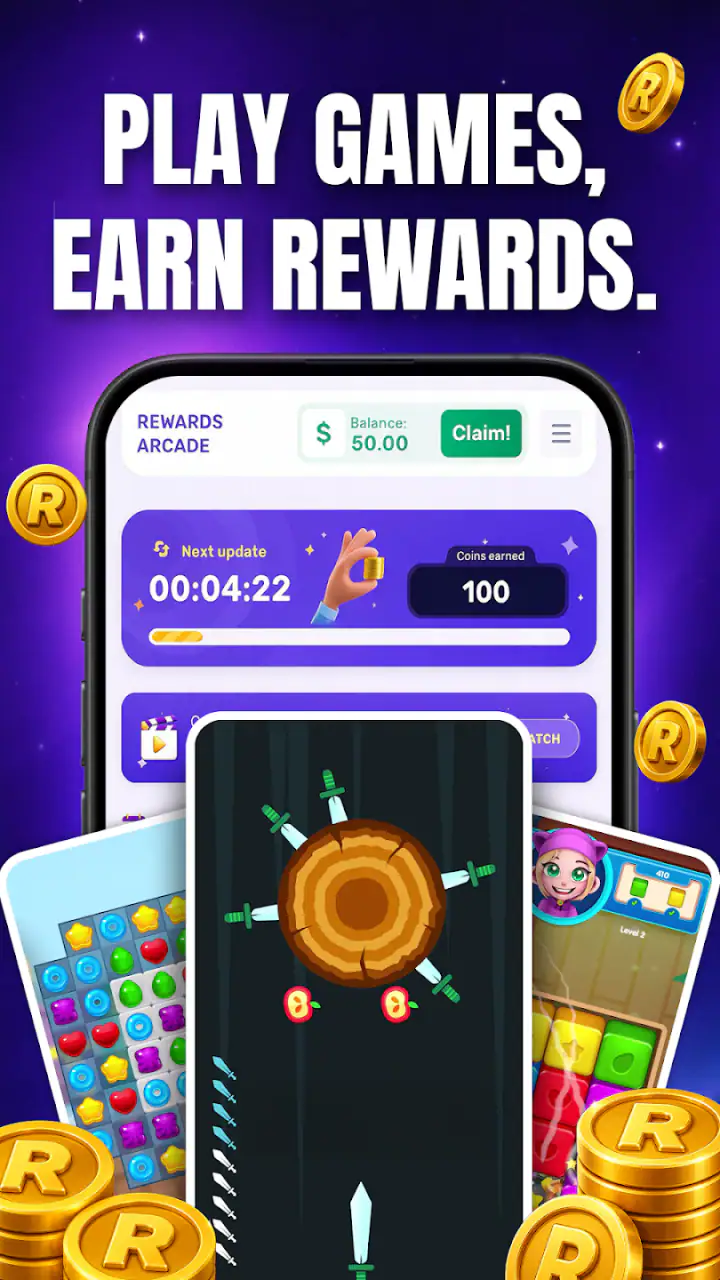
I also would not install it immediately before an important appointment expecting a guaranteed quick result. A better use is to open it when you already have unstructured spare time. That way, any delay or slower transition is less disruptive, and the entertainment remains optional rather than becoming a source of pressure.
What happens during heavier use
Heavier use means something different here than it does in a demanding action game. Instead of long continuous matches, it is more likely to mean repeated short sessions across the day, checking points frequently, or trying several activities in one sitting. That pattern is where the app’s design becomes more important than raw visual performance.
Repeated opening and closing can make any reward app feel repetitive. I would avoid treating every available moment as a reason to launch it. A more sensible approach is to set a personal time boundary, play when the activity sounds enjoyable, and stop when the session begins to feel like a chore. This protects the main benefit of the app: casual entertainment with a small incentive.
There is also a practical battery and data consideration, even without assigning a measurement to either. If you use the app for extended periods, keep an eye on your phone’s normal battery behavior and mobile-data settings. I would prefer Wi-Fi for longer sessions, particularly on a limited data plan. This is not a criticism unique to this title; it is simply a sensible habit for any app built around repeated online reward activity.
On an older phone, heavier use may expose weaknesses that are invisible during a single brief session. Background apps, limited free storage, or an aging battery can make transitions feel less consistent. If the app seems sluggish, I would first close unused apps and restart the device before deciding that the application itself is the problem.
Stability, interruptions, and recovering a session
Reliability matters more in a points-based app than in a normal disposable arcade game. If a casual round ends early, that is annoying. If progress is not reflected after a reward-focused action, the concern is much greater. For that reason, I would build the habit of checking that a session has finished properly before closing the app, especially after a longer run.
I would also avoid rapidly tapping through screens when a transition appears slow. Repeated taps can make it difficult to tell whether the app is processing an action or whether the input was missed. Waiting a moment and then checking the visible progress is a calmer workflow than immediately restarting the app.
If the app closes unexpectedly, my recovery order would be simple: reopen it, check the points area, and only then continue playing. I would not assume that a lost-looking screen automatically means the entire account history has disappeared. At the same time, I would not keep repeating the same action if the result is unclear. Take a screenshot of the relevant screen for your own record, note what you were doing, and use the developer’s official support route if a genuine account or redemption issue appears.
That recovery habit is especially useful because reward systems encourage people to focus on the final balance. A more reliable approach is to treat each session as complete only after the app visibly returns to its normal state. It adds a few seconds, but it reduces uncertainty and helps you spot whether the app is behaving consistently on your particular device.
Device limits and choosing where to install it
The minimum operating-system requirement is Android 7.1, so the app is not restricted to only the newest phones. That is good news for people using an older handset as a secondary device. Still, operating-system compatibility does not guarantee an identical experience across all hardware. Processor speed, memory, storage health, screen responsiveness, and battery condition can all affect how comfortable repeated sessions feel.
I would choose a phone with enough free storage for normal app updates and a stable connection. There is little benefit in installing a reward app on a device that is already constantly warning about storage or closing background processes. A clean, reasonably maintained phone is more likely to provide the steady experience this kind of short-session product needs.
Older hardware can actually be a sensible home for this app if it handles the current version comfortably. You do not necessarily need to use your main phone, particularly if you prefer to keep entertainment separate from work notifications. However, a very old device with an unreliable battery is a poor choice for any app you plan to open repeatedly throughout the day.
The Mature 17+ rating is another reason to think about who will use the app. I would not hand it to a younger child simply because the games appear casual. Parents should make their own decision based on the age rating and the way their family handles reward-oriented apps. The presence of cash or gift-card goals can also encourage repeated use, so sensible time limits are worth considering.
How it compares with ordinary mobile games
Compared with a conventional arcade game, the main difference is the purpose of play. A normal game usually measures success through scores, levels, unlocks, competition, or personal improvement. Rewards Arcade adds a points-and-redemption layer, which may make a short session feel more purposeful for someone who enjoys visible progress.
That extra purpose can also make the experience less relaxing. In a standard game, you can ignore the score and simply enjoy the mechanics. Here, the reward goal is part of the appeal, so you may find yourself thinking about efficiency instead of fun. If you prefer deep controls, rich progression, or a strong single-player story, I would choose a dedicated game instead.
Compared with other reward apps, this one is most attractive when you want a focused arcade-style format rather than surveys or purely passive activities. The trade-off is that your enjoyment depends more directly on whether the quick games hold your attention. Someone who dislikes repetitive mini-games may find a survey-based alternative more predictable, while someone who wants actual interaction may prefer this format.
I would also separate it from financial apps. The ability to work toward cash or gift cards does not make it a budgeting tool, a job, or a guaranteed earning method. It belongs on the entertainment side of your phone. That distinction is important because it keeps the reward in proportion to the time and attention you are giving it.
Small habits that make the experience better
My first practical tip is to decide what a successful session means before you start. It could be playing for a few minutes, trying one activity, or checking progress once. Without a limit, reward loops can encourage you to keep going simply because the next milestone feels close. A personal stopping point keeps the app from taking over time that would be better spent elsewhere.
Second, keep your redemption goal realistic. I would check the available options and any visible requirements before spending a lot of time chasing points. This is not about assuming a problem; it is about making sure the goal matches your patience. If the path feels too long for the amount of enjoyment you get, the right decision may be to use the app occasionally rather than make it part of your daily routine.
Third, treat connection quality as part of the workflow. When you are on an unstable network, avoid making important progress checks in a hurry. Let the app settle, confirm the balance or status you can see, and then close it. This simple pause is more useful than repeatedly switching between mobile data and Wi-Fi while trying to force a result.
Fourth, use a separate mental budget for attention. Many people track money but not minutes. I would ask whether the app is still entertaining after several sessions, not merely whether the points are increasing. That question helps identify the point at which the reward stops compensating for the repetition.
Finally, keep the application updated through your normal app-store process when a new version is offered. The current version, 2.0.17, shows that the app is maintained through version changes, but I would still check that the phone remains compatible and that the experience is stable after an update before beginning a long session.
Who should try it, and who should skip it
I can recommend giving it a try if you enjoy short arcade activities, like checking visible progress, and already have spare moments during the day. It may suit commuters, people taking brief breaks, or anyone who wants something more interactive than scrolling but less demanding than a full mobile game.
I would be more cautious if you are installing it mainly for income. The entertainment value should come first. If you need predictable earnings, this is the wrong category of app to depend on. A regular job, a legitimate freelance platform, or a dedicated financial tool serves a different purpose and offers a more appropriate structure.
You should also skip it if you strongly dislike repeated short games, reward tracking, or waiting through app transitions. A free download costs no purchase price, but it can still cost time, attention, battery, and data. Those are real costs even when no money changes hands.
For families, the age rating deserves attention before installation. For owners of older phones, the Android 7.1 minimum makes it worth considering, but only if the device remains responsive in everyday use. In both cases, the decision is less about the headline reward and more about whether the app fits the person and the phone using it.
My performance verdict
After looking at the complete experience rather than only the reward promise, I see Rewards Arcade: Earn Cash as a lightweight entertainment option with a clear niche. Its quick-game structure is well suited to short breaks, and the points system gives casual play a concrete direction. The free price lowers the barrier to testing it, while support for Android 7.1 or later makes it accessible to a range of devices.
My reservation is that the value depends on personal tolerance for repetition and on how smoothly the reward workflow feels on your phone. I would not install it expecting a fast route to meaningful money, and I would not let the points goal decide how much of my day to spend. The best experience comes from treating it as a small extra, not a promise.
Overall, I would suggest trying it once if you want brief arcade entertainment with cash or gift-card goals in the background. Give yourself a short evaluation period, pay attention to loading, progress visibility, battery behavior, and how much actual fun you are having. If those elements line up, it can become a pleasant spare-time app. If they do not, a conventional mobile game may offer more enjoyment, while a dedicated earning service may be more suitable for people seeking practical financial returns.
My bottom line: this is worth exploring for casual players who value quick sessions and reward progress, but it should remain entertainment first. Use it within a time limit, confirm your progress before closing, and choose another option when predictability, deep gameplay, or dependable income matters more than a light arcade distraction.
FAQs for Rewards Arcade: Earn Cash
What is Rewards Arcade: Earn Cash, and how does it work?
Rewards Arcade: Earn Cash is a rewards app that lets users earn points or cash by completing activities such as playing selected mobile games, reaching in-game milestones, answering surveys, or trying promotional offers. After creating an account, you normally choose an available task, follow its requirements, and wait for the activity to be verified before your balance is updated.
Can I really make money with Rewards Arcade: Earn Cash?
The app may provide legitimate rewards for eligible activities, but it should not be considered a reliable source of income. Earnings generally depend on the number of offers available in your country, how long you spend completing them, and whether tracking works correctly. Before investing significant time, review the reward rates, eligibility rules, and user feedback carefully.
How can I withdraw my rewards from the app?
Withdrawal options and minimum payout requirements can vary depending on your location, account status, and the current version of the app. Rewards may be offered through digital payment services, gift cards, or other supported methods. Check the cash-out section before completing tasks, and make sure your payment details are accurate because incorrect information can delay or prevent delivery.
Is Rewards Arcade: Earn Cash safe to use?
As with any rewards platform, use the app cautiously and read its privacy policy, terms, and permissions before signing up. Avoid sharing sensitive information that is not necessary for rewards or payment processing, and never pay money to unlock a withdrawal. Download the application from an official store, use a unique password, and stop using it if its behavior seems suspicious.
Why are my points or completed offers not showing up?
Rewards can take time to appear because advertisers and tracking partners may need to verify that an offer was completed correctly. Common problems include using an existing game installation, blocking tracking permissions, switching devices, using a VPN, or failing to meet every condition. Keep screenshots and confirmation details, then contact in-app support if the reward remains missing.
Pros
- Simple arcade games make it easy to start earning points quickly.
- The app offers a variety of games
- reducing repetition during short sessions.
- Reward progress is visible
- making it easy to track points and milestones.
- Suitable for casual play when you have a few spare minutes.
- No advanced gaming skills are required to participate in most activities.
Cons
- Earnings may be small compared with the time needed to play.
- Reward availability and redemption options can vary by location.
- Frequent ads may interrupt gameplay and slow down progress.
- Some activities may require reaching high point thresholds before cashing out.
- The app may collect usage and device data for advertising or reward verification.


